.png)
.svg)
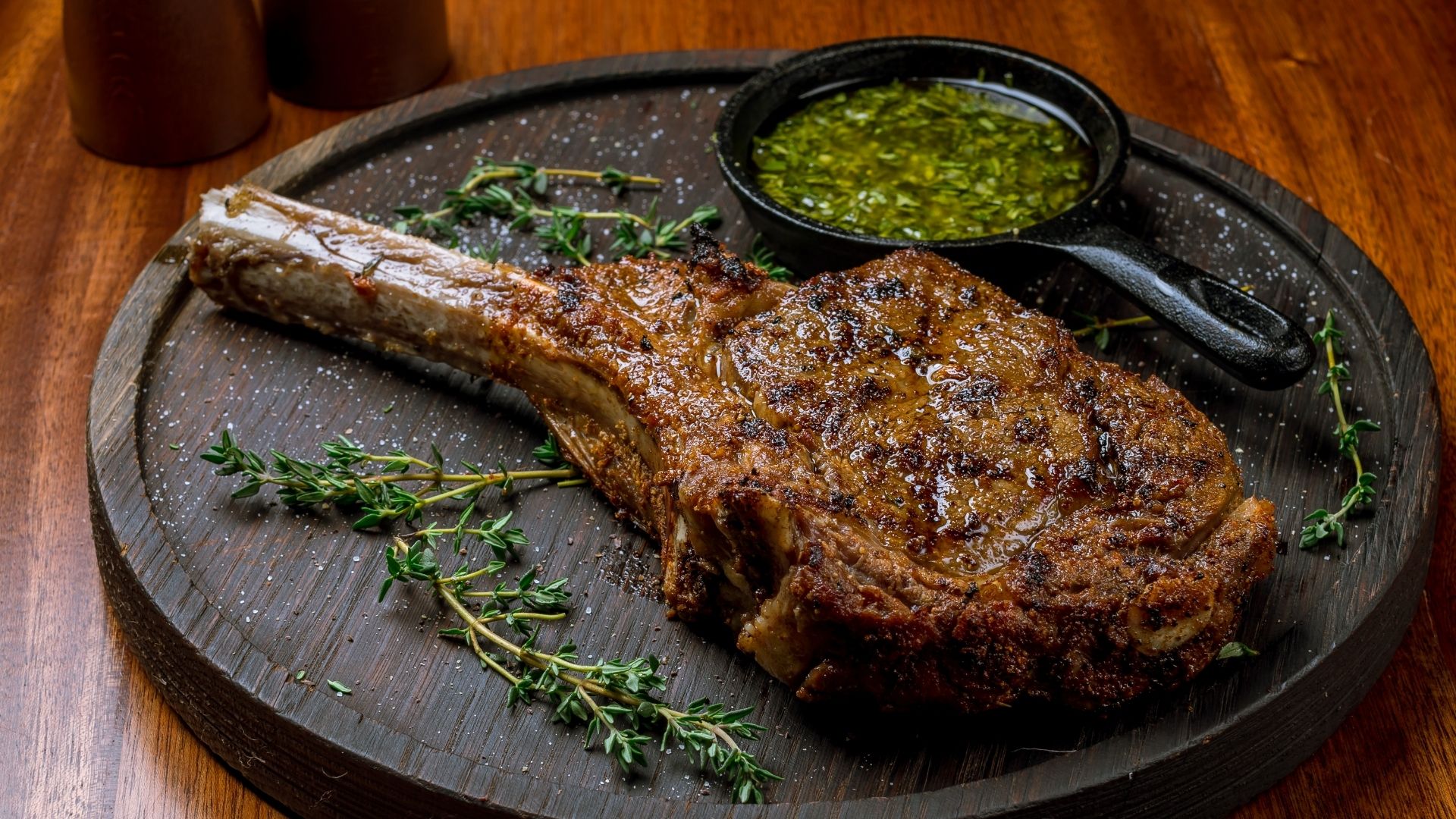
The Tomahawk steak, a rib-eye cut with its distinctive long, Frenched handle, is a modern culinary marvel that has captivated the palates of meat enthusiasts worldwide. While its precise origins remain a topic of debate, it's widely believed that the Tomahawk steak was popularised in the United States in the early 2000s, drawing inspiration from the Native American tomahawk axe for its striking presentation.
In French cuisine, this cut is known as côte de boeuf, a testament to its esteemed status in fine dining. In Dubai, it arrives on the menus of luxury steakhouses eager to offer a showpiece cut for discerning palates.
Cooking a Tomahawk steak, though, demands both technique and care. Its thickness calls for a balance of a seared crust and tender interior, often achieved by slowly bringing it to temperature before finishing over high heat for a caramelised exterior. Presentation matters as much as the cooking itself: the long bone and generous cut give the steak a commanding presence, hinting at the care and attention that went into every element of the dish.
However, to truly appreciate the French Tomahawk steak, one must understand the nuances of its preparation and presentation.
At a Glance:
- The French Tomahawk steak (côte de boeuf) is a rib-eye with a long Frenched bone, prized for its marbling, tenderness, and dramatic presentation.
- Choosing the right cut, well-marbled, thick, and dry-aged, is critical for flavour, juiciness, and texture.
- Cooking requires a balance of slow, even heat and a high-heat sear to achieve a caramelised crust with a tender, medium-rare interior.
- Seasoning and herbs, including salt, pepper, rosemary, thyme, parsley, and smoked paprika, enhance the meat without overpowering it.
- Presentation elevates the experience: a substantial platter, thoughtful sides, finishing touches, and attentive service make the meal visually and sensorially memorable.
- At DOORS Dubai, the experience is heightened by iconic views, curated sides, and the Presidential Table option for private, indulgent dining.
Anatomy of a Masterpiece

The journey to a perfect Tomahawk begins long before it hits the pan. Choosing the right cut is critical: a well-marbled, thick, dry-aged piece ensures the steak will be tender, juicy, and rich in flavour. Each decision top culinarians like those at DOORS Dubai make at this stage directly shapes what ends up on the plate.
Every choice made at this stage sets the tone for the steak’s final taste and texture:
- Marbling matters: Fine veins of fat running through the meat melt slowly during cooking, enriching each bite with buttery juiciness and preventing dryness.
- Thickness counts: A cut around 2 to 2.5 inches thick allows the interior to stay tender and pink while the exterior develops a deep, caramelised crust that adds texture and visual appeal.
- Ageing enhances depth: Dry-aged beef, ideally 30 to 45 days, develops concentrated, nutty flavours and a firmer texture that a fresh cut cannot match.
- The bone guides cooking: A long, Frenched bone slows heat transfer at the edges, promoting even cooking and keeping the meat tender all the way to the tip.
With this foundation in place, attention turns to the sear; the transformative step that locks in juices and builds that signature crust.
The Art of the Sear

Once brought to room temperature, the Tomahawk is placed in a cast-iron skillet that has been heated until it begins to smoke. A high-smoke-point oil, such as grapeseed or canola, encourages a deeply caramelised crust.
The steak is seared for 2 to 3 minutes per side, then finished in a low oven around 225°F (107°C) to achieve medium-rare perfection. A brief rest allows juices to redistribute, leaving each slice tender, evenly cooked, and richly succulent.
With the crust set and the interior perfected, the focus shifts to the delicate balance of herbs and seasonings that define its character.
A Herb and Seasoning Alchemy

Seasoning a French Tomahawk steak, or côte de boeuf, is an art that enhances its rich, beefy flavour while complementing its tender texture. The right blend of herbs and spices not only elevates the steak's taste but also honours the tradition of French culinary excellence.
Each herb and spice is chosen to enhance, not overwhelm, allowing the steak to speak for itself:
- Kosher Salt & Coarse Black Pepper: These basics draw out the beef's natural savor and form a flavorful crust when seared.
- Granulated Garlic: Provides a subtle, savory depth that complements the meat's inherent flavors without overpowering them.
- Fresh Rosemary & Thyme: Classic herbs that impart earthy, aromatic notes, enhancing the steak's profile.
- Parsley (in compound butter or sauces): Adds a fresh lift, cutting through the richness of the meat.
- Chimichurri (parsley, garlic, red wine vinegar, olive oil): Offers a vibrant tang that balances the fat and enriches each bite.
- Smoked Paprika: Introduces a hint of smokiness, complementing the seared exterior and layered taste.
Also Read: The Bold Pairing of a Tomahawk Steak and Cowboy Butter
The Plate as a Stage

Presenting a Tomahawk steak is an art form that transcends mere plating; it transforms the dining experience into a visual and sensory journey. Serving it improperly can diminish its grandeur. Common missteps include overcooked accompaniments, lacklustre garnishes, or haphazard plating that fails to respect the steak's majestic presence.
The ideal presentation elevates the Tomahawk to its rightful status. It should be served on a substantial platter or wooden board, allowing its impressive size to take centre stage.
Accompaniments like roasted garlic, grilled vegetables, or a touch of herb-infused butter should be thoughtfully arranged to complement, not overshadow, the steak. A drizzle of sauce or a sprinkle of finishing salt can add a final touch of elegance. Pairing the Tomahawk with a robust red wine, such as a Cabernet Sauvignon or Shiraz, enhances its rich flavours.
Equally essential, the ambience and attentive service frame the experience, ensuring each bite of the Tomahawk is savoured in a setting as refined as the steak itself.
Tomahawk en Scène

Imagine the first bite of a perfectly cooked Tomahawk; its crust crisp and caramelised, giving way to tender, juicy meat that melts across the palate. The subtle herb notes, gentle smokiness, and buttery richness create a symphony of flavours, while the bone-in presentation adds weight and ceremony to each slice.
At DOORS Dubai, this sensory journey is amplified by the city’s iconic backdrop: the shimmering Dubai Fountain reflecting light across the table, turning a meal into a spectacle. Every detail is curated for indulgence: sides, seasoning, and artful plating come together to create a feast for all senses. For an elevated experience, the Presidential Table, with a curated menu and personal butler service, ensures every moment unfolds seamlessly.
Reserving a table ensures the French Tomahawk experience unfolds flawlessly, allowing each bite to be savoured amid refined luxury and stunning views.
FAQs
1. What is a French Tomahawk steak?
A French Tomahawk steak is a rib-eye cut with a long Frenched bone, celebrated for its marbling, tenderness, and striking presentation.
2. How does the French Tomahawk differ from other Tomahawks?
Known as côte de boeuf in French cuisine, it is prepared with classic French techniques and herbs to enhance the meat’s natural richness.
3. How should a French Tomahawk steak be cooked?
A slow, even approach with a high-heat sear, often using the reverse sear method, ensures a crusty exterior and succulent interior.
4. Can sauces be served with a French Tomahawk?
Light touches, such as herb-infused butter or chimichurri, enhance the steak while letting its natural flavour shine.
5. Which herbs complement a French Tomahawk steak?
Fresh rosemary, thyme, parsley, and smoked paprika highlight the steak’s richness and aromatic profile.